A Rameshwaram pilgrimage can mean a focused Ramanathaswamy Temple ritual, a local circuit of Ramayana-linked shrines, or a longer coastal and mainland journey. You will be able to separate these routes, understand what each stop represents, and compare an itinerary against your group’s time, mobility and bathing needs.
Key takeaways
- Treat Agni Theertham and the 22 temple theerthams as separate sacred bathing stops.
- Include Dhanushkodi and Arichal Munai only after checking transport and weather conditions.
- Compare packages by darshan arrangements, hotel distance, vehicle hours and mainland extensions.
- Choose an itinerary that matches your walking ability, bathing plans and available travel time.
Ramanathaswamy Temple, Agni Theertham and the 22 Theerthams
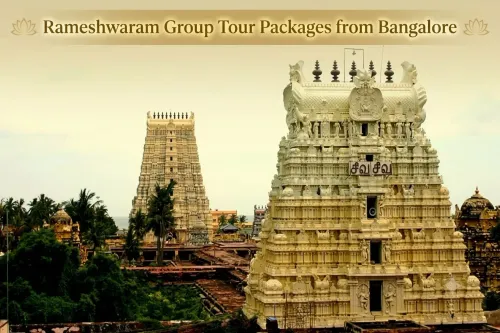
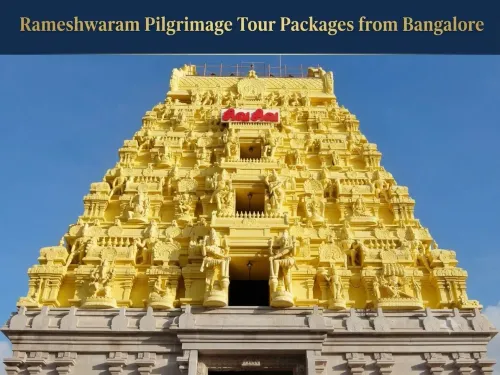
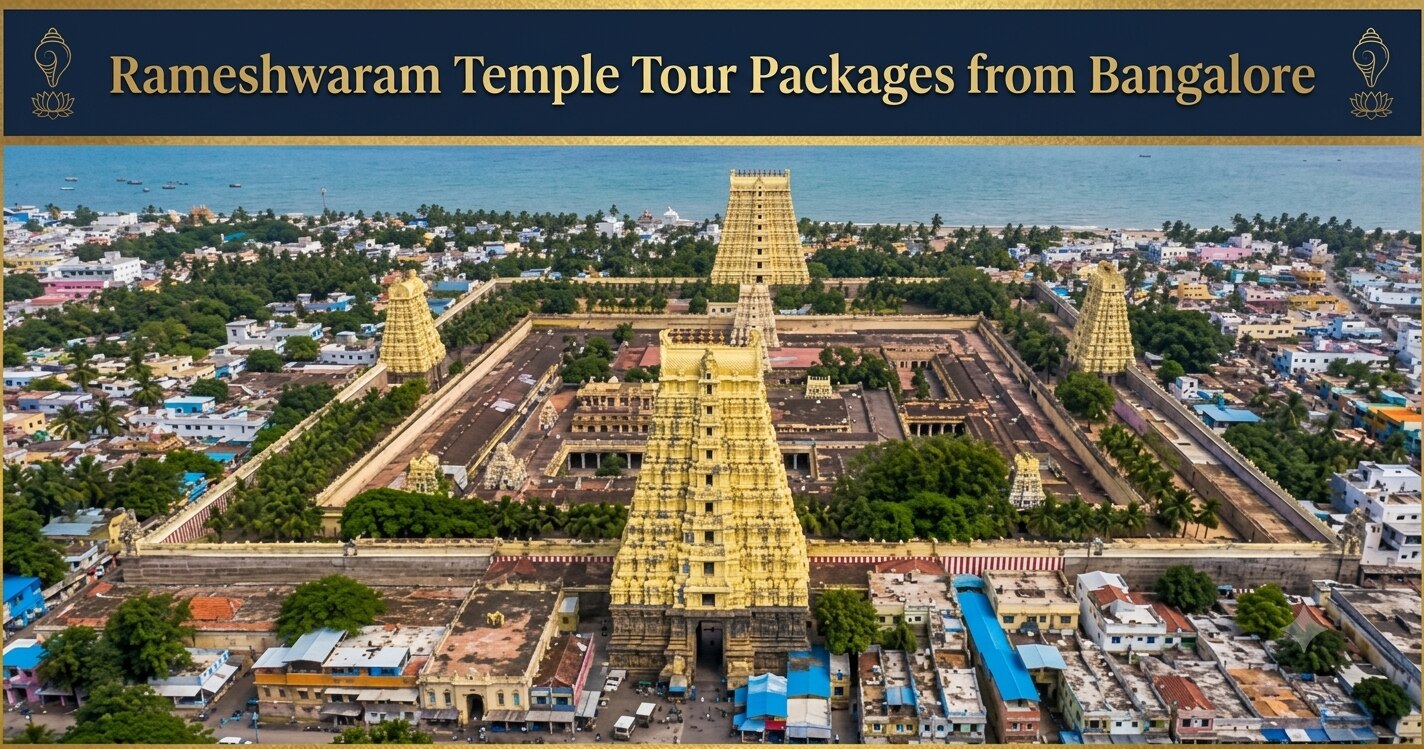
Ramanathaswamy Temple is the centre of the Rameshwaram pilgrimage. Its presiding deity, Ramanatha, is a form of Shiva traditionally counted among the twelve Jyotirlinga shrines and the four Char Dham pilgrimage sites. Agni Theertham, the seashore immediately east of the temple, is a separate sacred stop, not one of the temple’s internal theerthams.
Follow this sequence for the central visit:
- Bathe at Agni Theertham if sea conditions, personal health and local arrangements permit. Do not enter rough water simply because a ritual schedule includes bathing.
- Enter Ramanathaswamy Temple and proceed to the 22 theerthams. These are wells or water sources inside the complex, not 22 separate temples; attendants usually conduct the water baths through a managed, paid service.
- Change into dry, temple-appropriate clothing and complete darshan of Ramanatha after the well baths.
- Visit outlying shrines only after this central sequence, because they require separate walking or road travel.
| Site | What it means | Visit position |
|---|---|---|
| Agni Theertham | Sea associated with ritual purification | First |
| 22 theerthams | Temple wells and water sources | After the sea bath |
| Ramanathaswamy Temple | Main Shiva shrine and Jyotirlinga | Darshan after the baths |
| Outlying shrines | Additional Ramayana or local sites | Later, if included |
The nearby shrines: Panchamukhi Hanuman, Gandhamadana Parvatham and Lakshmana Theertham
After the main temple visit, these three shrines remain within or close to Rameshwaram town and fit a temple-focused day without the longer drive to Dhanushkodi. Their importance comes from Ramayana traditions, sacred water, and local devotional practice rather than from the 22-theertham ritual itself.
| Site | What it signifies | Practical place in the visit |
|---|---|---|
| Panchamukhi Hanuman Temple | Hanuman’s five-faced form represents protective power and devotion to Rama. The temple displays floating stones linked by tradition to Rama’s bridge; this is a devotional belief, not archaeological proof of its construction. | A short local stop after Ramanathaswamy Temple |
| Gandhamadana Parvatham | The small hill contains a Rama footprint shrine, traditionally identified as the mark left by Rama. Pilgrims also visit for the elevated view across the island. | A nearby shrine requiring a brief road transfer and some uphill movement |
| Lakshmana Theertham | This sacred tank and shrine honour Lakshmana, Rama’s brother, and extend the island’s Ramayana associations beyond the main temple. | An easy addition to a local sightseeing circuit |
Confirm these inclusions before booking: “nearby temples” does not always mean all three, and Gandhamadana Parvatham is a hill shrine, not a second major temple complex.
Kothandaramaswamy Temple, Dhanushkodi and Arichal Munai
These three sites require a separate road journey from the Ramanathaswamy Temple area towards Rameshwaram’s southeastern coast. Kothandaramaswamy Temple belongs to the Dhanushkodi-area circuit, where local tradition connects Rama’s meeting with Vibhishana and Vibhishana coronation; it is not part of the 22-theertham ritual.
| Stop | Significance | Travel and access expectation |
|---|---|---|
| Kothandaramaswamy Temple | Ramayana tradition surrounding Rama and Vibhishana | Reach it by road on the Dhanushkodi route; allow extra time beyond the central temple visit. |
| Dhanushkodi | The former coastal town destroyed by the 1964 cyclone | Expect an exposed, landscape-focused stop rather than a normal town visit; road conditions and local restrictions can alter access. |
| Arichal Munai | The southeastern coastal end associated with the Ram Setu landscape | The final stretch is vulnerable to wind, rain, rough sea and administrative limits; access can stop before the tip. |
Dhanushkodi and Arichal Munai are not interchangeable. Dhanushkodi refers to the wider ruined settlement and coastal area, while Arichal Munai is the exposed end reached along the road. Carry water, sun protection and footwear suitable for sand, and do not assume bathing or unrestricted shoreline access.
Choose a package that names each stop and states whether transport reaches the permitted endpoint. A temple-focused itinerary can omit this coastal road journey; a broader Ramayana circuit reserves a substantially longer outing for it.
Mainland extensions: Devipattinam, Tiruppullani, Uthirakosamangai and Madurai
Four mainland sacred places can turn a short island visit into a wider Tamil Nadu pilgrimage: Devipattinam, Tiruppullani, Uthirakosamangai and Madurai. Each requires separate road travel, so confirm whether the itinerary allows time beyond the Ramanathaswamy Temple area.
- Devipattinam, also called Navapashanam, is a coastal worship site centred on nine stones associated with the Navagrahas. Sea-based rituals depend on tide, weather and daylight, making it an optional extension rather than a dependable short-tour stop.
- Tiruppullani is linked to Rama’s penance on darbha grass before his search for a route to Lanka. The Adi Jagannatha Perumal Temple and its Darbha Sayana form of Vishnu make this a strong addition to a Ramayana-focused circuit.
- Uthirakosamangai is a Shaiva temple known for its Maragatha Nataraja, traditionally an emerald image. Its distance from the island core and crowds during special viewing occasions favour a longer route or an extra night.
- Madurai’s Meenakshi Amman Temple is a major South Indian shrine commonly paired with Rameshwaram on overland journeys from Bangalore, but it is a separate destination, not a Rameshwaram temple.
| Option | What it includes | When it fits |
|---|---|---|
| Temple-focused | Rameshwaram’s central rituals and nearby visits | A short pilgrimage |
| Ramayana or coastal circuit | Mainland shrines, coastal sites and outlying Ramayana locations | Add a full day or more |
| Tamil Nadu circuit | Rameshwaram combined with Madurai and other mainland stops | Choose a longer itinerary with overnight planning |
Access, timings, dress and suitability for different pilgrims
Assess each stop by physical demand, not just distance: the Ramanathaswamy Temple visit combines entry, darshan, queues and the 22 well baths, while coastal and hill sites add uneven ground or exposure.
- Ramanathaswamy Temple: Check the day’s temple timings and darshan windows before joining the queue. The 22 theertham service involves wet, slippery floors, repeated standing and movement between wells; elderly pilgrims or wheelchair users should ask where assisted access is available. Follow the temple’s dress code, leave footwear at the designated point under its footwear rules, and carry only permitted items.
- Agni Theertham: Sea bathing is separate from temple entry. Strong waves, slippery steps, changing facilities and crowding can make it unsuitable for children, frail adults and anyone with balance problems; a companion can complete the ritual while they remain safely ashore.
- Panchamukhi Hanuman, Lakshmana Theertham and Kothandaramaswamy: Confirm opening hours and the approach surface. Short walks still become difficult in heat, and uneven paving can restrict wheelchairs.
- Gandhamadana Parvatham: Treat the footprint shrine as a small hill stop, not a level temple complex; skip the climb if stairs or slopes are unsafe.
- Dhanushkodi, Arichal Munai and mainland shrines: Allow for long road transfers, wind and exposed ground. Weather or local administration can restrict access, so never rely on a guaranteed coastal visit.
How to compare a Rameshwaram package before booking
Choose what you want protected: ritual time at Ramanathaswamy Temple, or a wider Ramayana and coastal circuit. Compare Rameshwaram temple tour packages from Bangalore against a written itinerary, not the phrase “all temples.”
| Check | Temple-focused itinerary | Broader Ramayana or coastal circuit |
|---|---|---|
| Package inclusions | Ramanathaswamy Temple, Agni Theertham and the 22 theertham wells | Adds Panchmukhi Hanuman, Gandhamadana Parvatham, Kothandaramaswamy Temple, Dhanushkodi or Arichal Munai |
| Transport distance | Fewer separate road journeys after reaching Rameshwaram | Lists each outlying stop, road distance and total driving time |
| Darshan arrangements | States temple entry, queue process and whether bathing precedes darshan | States which temple visits are fixed and which depend on arrival time |
| Extra mainland stops | Keeps time for Rameshwaram rituals | May add Devipattinam, Tiruppullani or Madurai Meenakshi Amman Temple |
Ask for hotel location, departure and return times, meal coverage, vehicle type and charges for unlisted entry or bathing services. Confirm whether Dhanushkodi access changes with weather or local restrictions.
Elegant Tours should provide these details in the quotation so you can compare travel effort rather than compare attractive site names. A broader circuit suits you only if you accept less unhurried time for the central ritual.
Frequently asked questions
What are the main sacred places in a Rameshwaram temple tour?
The core pilgrimage includes Ramanathaswamy Temple, Agni Theertham and the 22 internal theerthams. Nearby stops include Panchamukhi Hanuman, Gandhamadana Parvatham and Lakshmana Theertham.
Which places are included in the Dhanushkodi excursion?
The excursion commonly covers Kothandaramaswamy Temple, Dhanushkodi and Arichal Munai. Check whether the package includes the vehicle transfer and time for each stop.
Which mainland temples can be added to a Rameshwaram package?
Mainland extensions can include Devipattinam, Tiruppullani, Uthirakosamangai and Madurai. Each addition increases road time, so compare the route with your available days.
What should pilgrims check before visiting Rameshwaram temples?
Check temple timings, bathing arrangements, dress expectations, walking distances and transport access. Confirm suitability when travelling with older adults, children or people with limited mobility.
How do you compare Rameshwaram temple tour packages from Bangalore?
Compare the number of nights, hotel location, transport vehicle, darshan arrangements, theertham access, Dhanushkodi coverage, meals and mainland extensions rather than comparing only the headline price.